
The most effective way to study pharmacology is to learn by drug class using a prototype drug, anchor recall with suffix patterns and targeted mnemonics, and lock in retention through spaced repetition and NCLEX-style practice questions with rationales. Pharmacology carries real weight on the NCLEX-RN, and tracking your accuracy by drug class through practice analytics, the kind Nursing School Pro's study center provides, tells you exactly where to focus next.
TL;DR:
- Learning drug classes with prototype drugs and suffix patterns helps students predict drug effects and risks without memorizing each individual medication.
- Using spaced repetition flashcards with detailed, structured information enhances long-term retention and allows tracking progress by drug class.
- Practicing NCLEX-style questions with rationales and categorizing errors improves pattern recognition and boosts exam performance.
- Mastering high-yield drug classes and calculation skills before test day strengthens understanding and reduces last-minute cramming.
- Incorporating active recall early in study routines and analyzing mistake patterns offers the most effective approach to pharmacology mastery.
Table of Contents
- Pharmacology Study Guide Techniques That Actually Stick
- Build a Flashcard System That Uses Spaced Repetition
- Practice Questions, Rationales, and NCLEX Test Strategy
- Medication Calculations You Cannot Skip
- High-Yield Drug Classes and Prototype Quick Reference
- How Nursing School Pro Turns This Guide Into a Daily Routine
- What the Research on Pharmacology Study Methods Gets Wrong
- Start Studying Smarter With Nursing School Pro
- Sources
Pharmacology Study Guide Techniques That Actually Stick
Memorizing 200 individual drug names is a losing game. Learning 30 drug classes and one representative drug for each is not. This is the prototype drug method, and it works because most drugs in a class share a mechanism, a side effect profile, and a nursing consideration. Learn metoprolol well, and you have a working model for every other beta blocker you'll meet on an exam.
Suffix recognition speeds this up further. Drug names aren't random; they follow patterns tied to their pharmacologic class, and recognizing those endings lets you predict both function and risk before you've studied the specific drug.
- -olol (metoprolol, atenolol): beta blockers, watch for bradycardia and hypotension
- -pril (lisinopril, enalapril): ACE inhibitors, watch for the dry cough and hyperkalemia
- -statin (atorvastatin, simvastatin): cholesterol drugs, watch for muscle pain and liver enzyme changes
Mnemonics work best when you build your own around a clinical scenario rather than borrowing a generic one, and test them immediately with a handful of practice questions to see if they actually hold up under pressure.
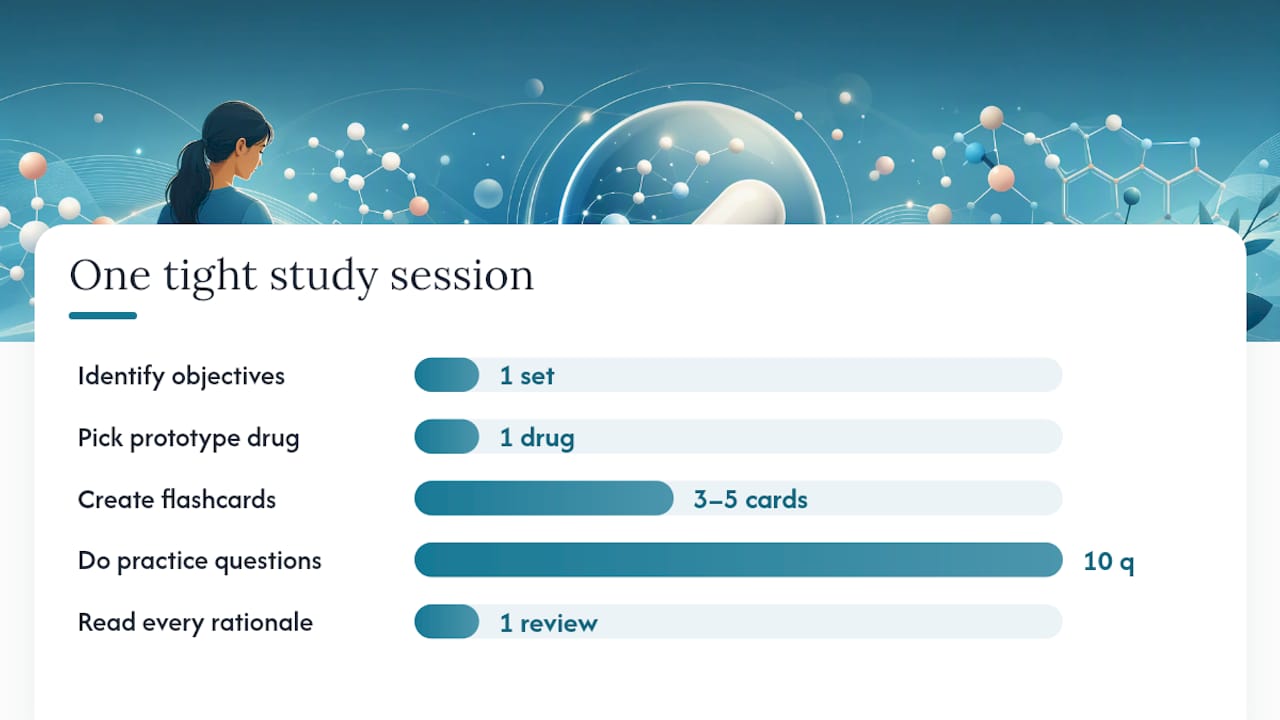
A tight study session for one drug class looks like this: identify the class's core objectives, pick the prototype drug, build three to five flashcards, run ten practice questions on that class, then read every rationale, right or wrong. Our guide on drug suffixes breaks down more patterns worth memorizing early.
Pro Tip: Group your practice questions by class immediately after a study session, not days later. Testing yourself while the material is still fresh exposes gaps before they harden into wrong assumptions.
Build a Flashcard System That Uses Spaced Repetition
A good pharmacology flashcard has seven parts: generic name, class, mechanism in one line, major side effects, monitoring steps, patient teaching, and a source line noting where the fact came from and when you checked it. That source line matters more than students think, since guidelines and drug information change between textbook editions.
Paper cards work, but a spaced-repetition platform or app schedules reviews for you based on how well you already know each card, which is a real advantage over flipping through a static stack. Combining spaced repetition with active recall is consistently linked to stronger long-term retention than passive rereading.
- Day 0: create the card right after lecture
- Day 1: first review
- Day 3: second review
- Day 7: third review, then expand the interval as accuracy improves
The most common flashcard mistake is cramming too many facts onto one card. Stick to one decision per card, and if a card keeps getting missed, rewrite it rather than rereading it the same way again.
Pro Tip: Use our free drug card templates to standardize your cards from day one, so every card has the same structure and nothing gets left out.
Practice Questions, Rationales, and NCLEX Test Strategy
Reading the rationale for every answer choice, not just the one you picked, is what turns memorized facts into the pattern recognition the NCLEX actually tests. Skipping the rationale for a question you got right wastes half the value of that question.
Pharmacology and parenteral therapies make up 13 to 19 percent of NCLEX-RN items, the second-highest weighted content area on the exam, which is why integrated case vignettes lean so heavily on medication judgment rather than simple recall.
A workable practice loop:
- Run timed, closed-book question sets by drug class
- Log every miss and categorize the error type: missing fact, misapplied class rule, misread stem, or ambiguous wording
- Remediate the specific category, not the whole topic
- Rotate in new question sets weekly to avoid pattern memorization
Our breakdown of practicing with rationales walks through building this loop into a weekly rhythm.
Medication Calculations You Cannot Skip
Four calculation types show up constantly: IV flow rates, mg/kg weight-based dosing, concentration and dilution problems, and basic unit conversions. Get comfortable with all four before test week, not the night before.
- Identify the units you're given and the unit you need
- Set up a unit-cancellation equation so the math checks itself
- Double-check the answer against what a reasonable dose should look like
If your answer suggests giving 40 tablets or running an IV at 900 mL/hr, that's a red flag, not a final answer.
Pro Tip: For high-alert medications like insulin, heparin, and opioids, calculate the dose twice using two different methods. If they don't match, something's wrong with your setup, not the drug.
High-Yield Drug Classes and Prototype Quick Reference
Pharmacology and parenteral therapy questions account for 13 to 19 percent of the NCLEX-RN, which means these classes deserve flashcards before almost anything else.
- Beta blockers (metoprolol): block beta receptors; watch for bradycardia; hold if heart rate drops below 50
- ACE inhibitors (lisinopril): block angiotensin conversion; watch for hyperkalemia and cough
- Loop diuretics (furosemide): block sodium reabsorption; watch for hypokalemia; monitor potassium
- Anticoagulants (heparin): inhibit clotting factors; watch for bleeding; monitor aPTT
- Insulin (regular insulin): lowers blood glucose; watch for hypoglycemia; check glucose before administering
- Opioids (morphine): bind opioid receptors; watch for respiratory depression; monitor respiratory rate
- Antibiotics (vancomycin): inhibit bacterial cell wall synthesis; watch for nephrotoxicity; monitor trough levels
Turn each row into a card. That's seven cards covering a meaningful share of a high-weight exam category.
How Nursing School Pro Turns This Guide Into a Daily Routine
Reading about a study method and running it are different things. Nursing School Pro's question bank pairs every practice question with an instant rationale, so the review step above isn't optional, it's built into the answer screen. Real-time analytics then show accuracy by drug class, which tells you whether your beta blocker cards are solid or your diuretic knowledge needs another pass.
A workable seven-day starter: audit your syllabus for upcoming drug classes, run a baseline quiz to find weak categories, build your class map and prototype cards, review flashcards daily, run mixed practice questions every other day, and check your analytics dashboard on day seven to decide what carries into week two.
What the Research on Pharmacology Study Methods Gets Wrong
Most study advice treats memorization and testing as separate phases: learn the material first, then quiz yourself later to check retention. That sequencing is backward. The evidence on active recall points the other direction, testing yourself early and often is what builds the memory in the first place, not just a way to confirm it exists.
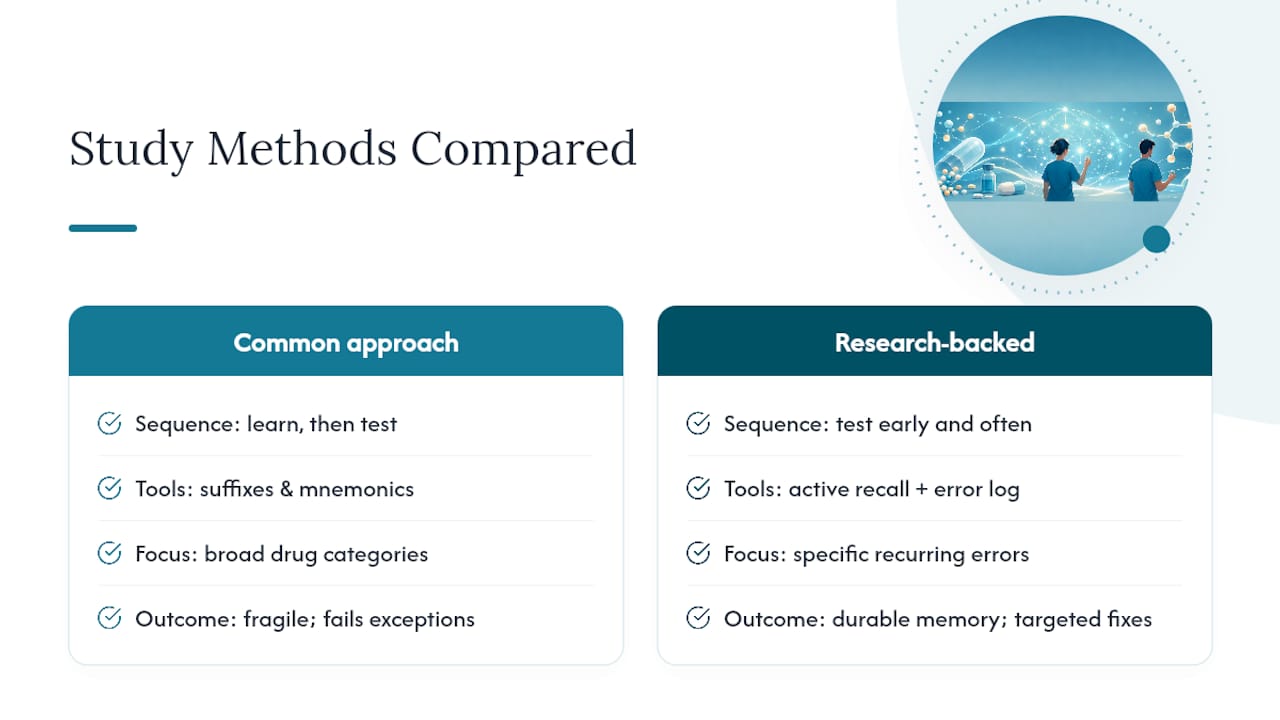
The bigger gap I see in how students approach pharmacology is treating suffixes and mnemonics as the whole strategy. They're useful shortcuts, but they only work if you already understand the underlying mechanism well enough to know when a drug breaks the pattern. Atypical antipsychotics don't follow tidy suffix rules the way ACE inhibitors do, and a student who leans on memorization tricks alone gets caught by exactly those exceptions.
If you take one thing from this guide, prioritize the error log over the flashcard deck. Knowing that you keep missing questions about potassium-sparing diuretics specifically, rather than "diuretics" generally, is the difference between vague anxiety about pharmacology and a study plan you can actually execute this week.
— Autumn
Start Studying Smarter With Nursing School Pro
Everything in this guide, class-based learning, spaced flashcards, rationale review, error tracking, works better when it's measured instead of guessed at. Nursing School Pro's study center gives you an NCLEX-aligned question bank with instant rationales and real-time analytics that show exactly which drug classes need more reps, plus downloadable templates so your flashcards follow the structure this guide recommends from the start.
Two moves get you started today:
- Start the 48-hour free trial and run a baseline pharmacology quiz to see where you actually stand
- Follow the seven-day study cycle above, then use your analytics to plan week two
At $20 a month after the trial, it's built to carry you from your first pharmacology unit through NCLEX day.
Sources
- Pharmacology Exam Prep: Memorization Techniques for Nursing Students | Chamberlain University
- How to Study Pharmacology in Nursing School - Quizgecko
This article is general information, not a substitute for advice from a qualified doctor. Consult a qualified healthcare professional about your own circumstances before acting on anything here.