
The NCLEX pulls from a set of core item families, plain multiple choice, multiple-response (select all that apply), hot-spot, drag-and-drop, dropdown/cloze, exhibits, ordered response, and numeric fill-ins, and the Next Generation NCLEX layered case-study clusters and Clinical Judgment Measurement Model items on top of them, along with partial-credit scoring for multi-answer items. The official candidate tutorial and sample pack is the fastest way to see every format before test day.
TL;DR:
- The NCLEX is a variable-length CAT exam with 85 to 150 items, taking up to five hours, and adjusts question difficulty based on your responses.
- Different question formats, including multi-response and case-study clusters, require unique strategies, especially under partial-credit scoring models.
- The Next Generation NCLEX introduces new item types like matrix, drag-and-drop, and highlight questions, linked to a clinical judgment framework.
- Practicing with official tutorials, case clusters, and rationales improves reasoning skills more than content review alone.
- Focusing on understanding question types and scoring methods, and using real-time analytics, enhances targeted practice and increases chances of passing.
Table of Contents
- What Is the NCLEX Exam Format? CAT, Item Count, and Scoring Explained
- Traditional and Alternate Format Items: How Each One Works
- What Is the Next Generation NCLEX (NGN)?
- How Should Scoring and CAT Behavior Change Your Test-Taking Strategy?
- How Should You Practice for NGN and Alternate Item Types?
- Why Rationales and Case Practice Matter More Than Content Review Alone
- What Actually Separates NCLEX Passers From Everyone Else
- Master Every NCLEX Question Type With Nursing School Pro's Study Center
- Sources
What Is the NCLEX Exam Format? CAT, Item Count, and Scoring Explained
The NCLEX-RN and NCLEX-PN are variable-length computerized adaptive tests (CAT), meaning the exam selects your next question based on how you answered the last one. Every candidate gets somewhere between 85 and 150 items, and you have up to five hours to finish, including breaks.
CAT doesn't just ratchet up difficulty the longer you survive. It's constantly trying to pin down your ability level, aiming for items where you have roughly a 50% chance of answering correctly, then adjusting up or down from there. That's a different mental model than a fixed-length test, and it matters for how you should approach missed questions.
Scoring on multi-answer items works differently than a standard right-or-wrong grade. The NCLEX test plan documents three partial-credit models:
- Plus/minus scoring: you earn a point for each correct choice and lose one for each incorrect choice.
- Zero/one scoring: you must select every correct option and no incorrect ones to earn any credit.
- Rationale scoring: credit depends on whether your combined answer choices reflect sound clinical reasoning, not just an exact key match.
Knowing which model applies to a given item type changes your strategy. Under plus/minus scoring, guessing on an option you're unsure about can still help. Under zero/one, a single wrong click zeroes out the whole item, so precision beats guessing every time.
Traditional and Alternate Format Items: How Each One Works
Legacy and alternate-format questions still make up a large share of most exams, and each one tests something specific.
- Plain multiple choice. Four options, one correct answer. Read the stem twice before looking at the choices, and eliminate options that answer a different question than the one actually asked.
- Multiple-response (select all that apply). Evaluate each option as its own true-or-false statement instead of comparing them against each other. This format has a reputation for being brutal because there's no "process of elimination" shortcut. You either know the content or you don't.
- Hot-spot and image-based items. You click directly on an image, an EKG strip, a body diagram, an X-ray. Scan the whole image first, identify landmarks, then narrow to the specific point the stem is asking about.
- Ordered response, drag-and-drop, and dropdown/cloze. These test sequencing and logical priority, first action in an emergency, correct order of steps in a procedure. Build your sequence, then re-read it top to bottom as if you were the nurse actually performing it.
- Numeric fill-in items. Dosage calculations, IV drip rates, weight conversions. Double-check your units before you calculate, not after, and confirm whether the item wants you to round.
- Exhibit and chart items. Multiple tabs (vitals, labs, nursing notes, orders) hide the data you need. Skim every tab once before answering so you know where the relevant number lives instead of hunting mid-question.
Pro Tip: On select-all-that-apply items, write out "T" or "F" next to each option in your head before you touch the mouse. It forces you to actually evaluate every choice instead of pattern-matching to what "looks right."
What Is the Next Generation NCLEX (NGN)?
NGN is NCSBN's answer to a long-standing complaint: traditional item formats couldn't fully capture how a nurse actually thinks through a deteriorating patient. The redesign added case-study clusters and new item types built around the Clinical Judgment Measurement Model, a six-step framework that tracks how you recognize cues, analyze them, prioritize hypotheses, generate solutions, take action, and evaluate outcomes.
A case study presents one evolving patient scenario, then asks a series of linked questions, each one mapped to a different CJMM step. Get the "recognize cues" question wrong, and it can color how you approach the "prioritize hypotheses" question that follows in the same cluster.
Inside these clusters, expect item types you won't find in the legacy format. According to Osmosis's breakdown of NGN item types, that list includes:
- Matrix multiple choice and multiple response (grid-style tables where you mark answers across rows and columns)
- Dropdown and drag-and-drop cloze (fill in blanks within a clinical narrative)
- Highlight text or highlight table (click to flag relevant findings in a chart or note)
- Grouping items (sort findings into categories like "expected" versus "unexpected")
NGN also includes stand-alone items, trend and bow-tie questions, that test clinical judgment in a single question rather than a multi-part scenario. A bow-tie item asks you to identify a condition's cause, the actions to take, and the expected outcomes, all in one screen.
A workable approach to any case cluster: preview all the questions in the set first so you know what's coming, identify what clinical goal each one is testing, mentally tag each question to its CJMM step, then answer in order rather than skipping around. Nursing School Pro's walkthrough of real NGN case-study examples breaks this workflow down question by question.
How Should Scoring and CAT Behavior Change Your Test-Taking Strategy?
Partial credit changes the math on multi-key items. If a case-study question uses zero/one scoring, a single incorrect click wipes out the whole item, so it's worth spending an extra 10 to 15 seconds confirming your full selection set before moving on. If it uses plus/minus scoring, a reasonable guess on a borderline option carries less risk.
Because CAT is estimating your ability rather than just cranking up difficulty, a run of hard questions isn't necessarily a bad sign, it might mean the system already thinks you're doing well. Don't let a tough stretch spiral into panic; that mindset costs more points than the actual content difficulty does.
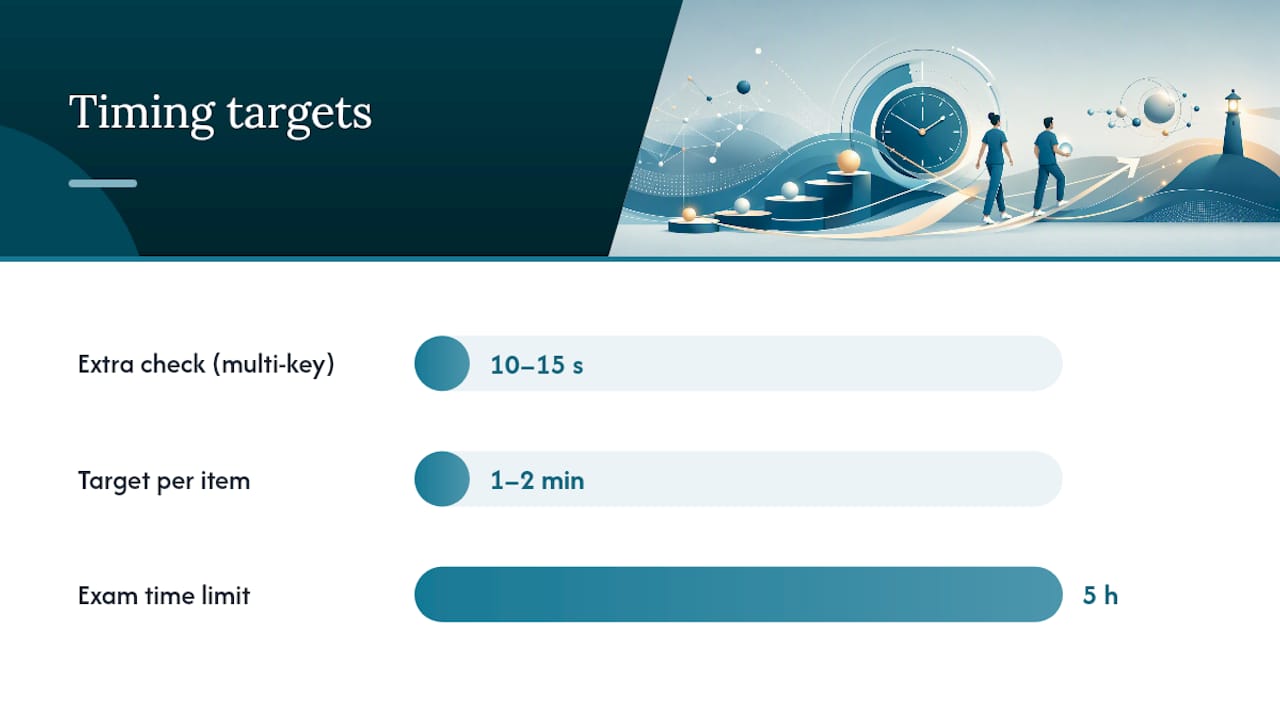
Pacing matters given the five-hour ceiling. A rough target of one to two minutes per item keeps you on pace without rushing case-study clusters, which take longer to read.
Before submitting a multi-response or case-study answer, run this quick check:
- Do your selections agree with each other, or does one choice contradict another?
- Did you answer the actual clinical priority, not just a technically true statement?
- If it's a numeric item, did you confirm the unit before locking in the number?
Pro Tip: Never revisit answered questions if the platform allows it, on a CAT exam, going back and changing a response can affect how the algorithm calibrates your ability estimate for later items. For more on pacing under pressure, see Nursing School Pro's guide to NCLEX test strategies.
How Should You Practice for NGN and Alternate Item Types?
- Start with the official candidate tutorial and sample pack. It's the only resource that replicates the actual on-screen tools, drag-and-drop mechanics, dropdown menus, highlight function, so there's no substitute for running through it before test day.
- Practice with clustered case-study sets rather than isolated single questions. Mapping practice questions to CJMM steps builds the same reasoning chain the real exam tests, and research on NGN practice design backs clustered practice over one-off drills.
- Read every rationale, correct and incorrect answers alike. A missed question with a rationale you actually study turns into reasoning you retain; a missed question you skip past teaches you nothing.
- Use progress analytics to find your weak item types specifically, not just weak content areas, then drill those formats directly. Nursing School Pro's rationale-based study plan walks through building this kind of targeted routine.
Why Rationales and Case Practice Matter More Than Content Review Alone
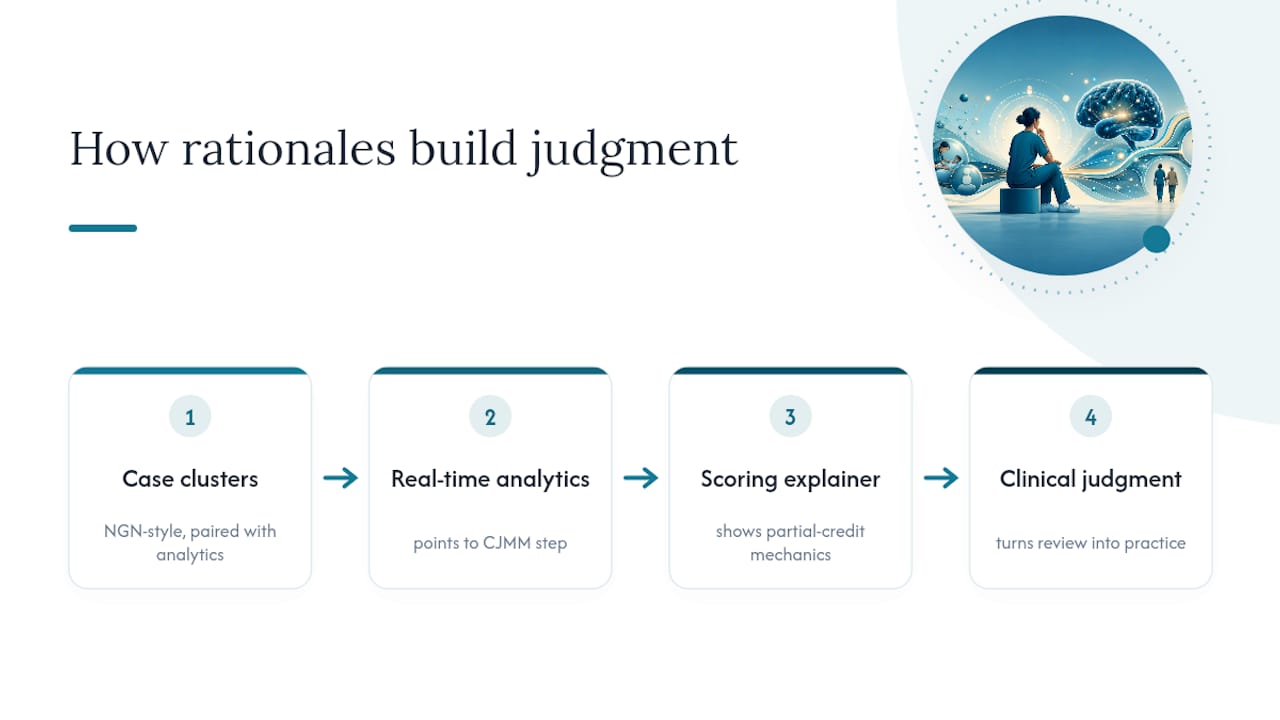
Autumn, editorial lead at Nursing School Pro, built this platform around one belief: instant rationales aren't a nice add-on, they're the actual mechanism by which content review turns into clinical judgment. Our Study Center pairs NGN-style case clusters with real-time analytics, so a wrong answer on a bow-tie item points straight to the CJMM step you need to shore up. The platform's scoring explainer and study-plan guide exist because knowing the mechanics behind partial credit changes how you should practice, not just how you should test.
What Actually Separates NCLEX Passers From Everyone Else
Most candidates over-invest in memorizing content and under-invest in reasoning through it. NGN punishes that imbalance hard, because a case cluster doesn't reward you for knowing a fact in isolation, it rewards you for connecting that fact to the next clinical step. Practice with intention: read every rationale, then explain the answer out loud to someone else, even a study partner who knows nothing about nursing. If you can teach it, you understand it. And if NGN items feel harder than what you studied in nursing school, that's expected, not a sign you're behind.
— Autumn
Master Every NCLEX Question Type With Nursing School Pro's Study Center
Reading about item types only gets you so far. Nursing School Pro's Study Center gives you NGN case-study clusters, matrix and bow-tie practice sets, and instant rationales on every question, so you find out why an answer is wrong the moment you miss it, not days later reviewing a printed answer key.
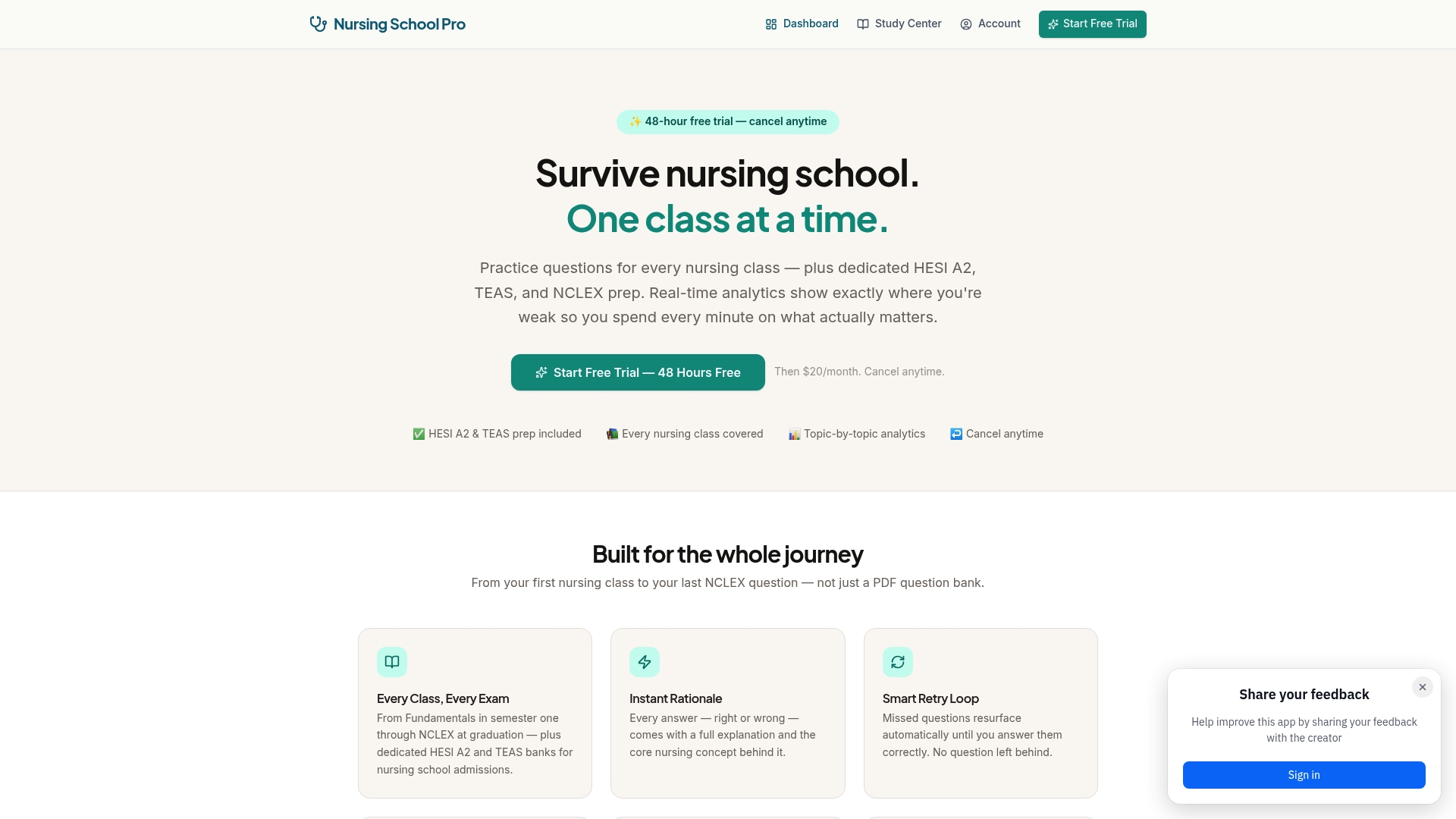
Real-time analytics track which item types and CJMM steps are actually costing you points, so your practice time goes toward your weakest formats instead of content you've already mastered. Start with the 48-hour free trial and see how targeted, rationale-driven practice compares to generic question banks.