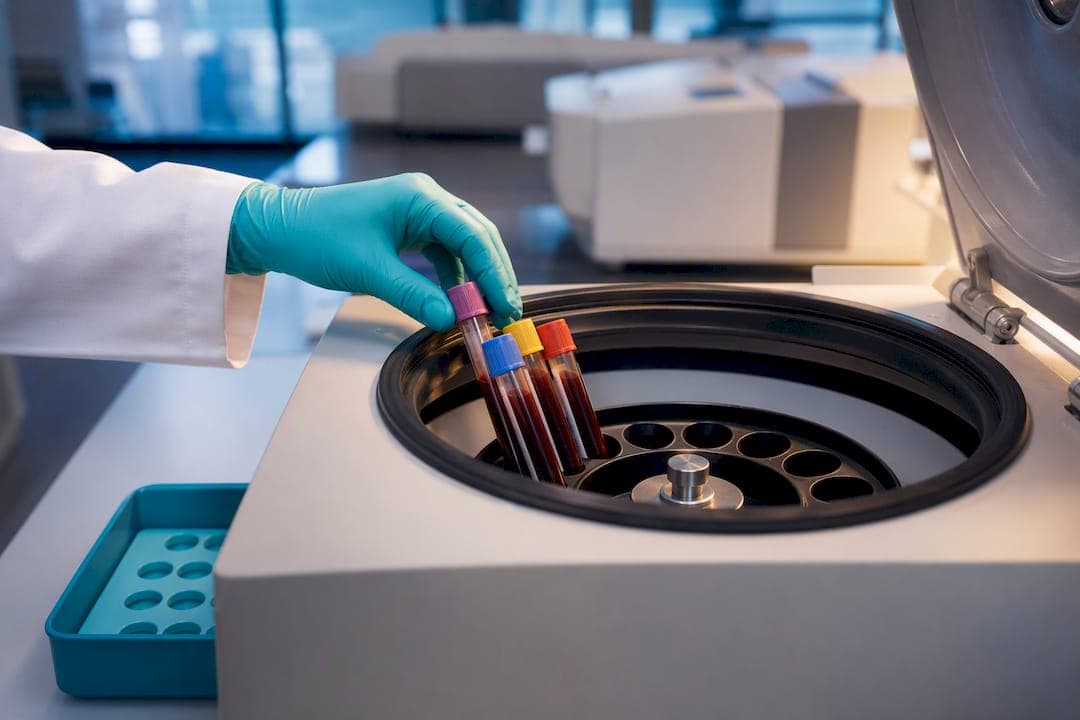
This guide gives you the normal adult lab value ranges nurses check most on shift, plus the interpretation logic behind them for clinicals and NCLEX. Every lab has its own reference range printed right on the report, so treat the numbers below as the working baseline, not a substitute for what's in front of you. You'll also get memorization tactics for turning raw numbers into pattern recognition fast.
TL;DR:
- Most abnormal lab values should be confirmed with redraws to rule out hemolysis or testing errors before clinical action.
- Key thresholds include potassium above 6.0 or below 2.5 mEq/L, pH outside 7.25 to 7.55, and platelets below 20,000/mcL, all warranting immediate attention.
- Recognizing patterns within each body system, such as elevated transaminases indicating alcohol injury or rising WBC with fever signaling infection, enhances interpretation skill.
- Studying lab values through system grouping and understanding underlying reasons improves retention more effectively than memorization alone.
- Cross-check laboratory results against the specific lab's reference range printed on the report for accurate interpretation.
Table of Contents
- Quick-Reference Table for Common Lab Values in Nursing
- How to Interpret Abnormal Lab Values Fast
- System-by-System Patterns Worth Memorizing
- Study Techniques That Make Lab Values Stick
- Turning Lab Knowledge Into Exam-Ready Confidence
- Where to Verify Lab Values Beyond This Guide
- What Nursing Programs Get Wrong About Teaching Lab Values
- Sources
Quick-Reference Table for Common Lab Values in Nursing
Nursing lab reference ranges shift slightly between hospitals depending on the assay and the equipment a lab uses, which is why the Merck Manual stresses interpreting every result against that specific lab's printed interval rather than a memorized number. The ranges below reflect standard adult, nonpregnant values compiled from the NCBI reference appendix and the ABIM laboratory reference list.
Urinalysis basics round out the panel: pH typically runs 4.5 to 8, specific gravity 1.005 to 1.030, and a normal dipstick shows no protein, nitrites, or significant WBC/RBC. Pregnancy shifts several of these, hemoglobin and hematocrit drop due to plasma volume expansion, and pediatric ranges differ enough that they need their own chart entirely. For deeper explanations of individual tests, MedlinePlus offers plain-language breakdowns that pair well with the numbers above.
How to Interpret Abnormal Lab Values Fast
Before you react to any number, check three things: patient identity on the label, whether the sample looks hemolyzed, and whether the draw matched the ordered conditions (fasting, trough, peak). A surprising number of "critical" potassium values turn out to be hemolysis or a long tourniquet time rather than a real physiologic problem, which is why a value that doesn't match the clinical picture deserves a redraw before you page anyone.
Once you've confirmed the sample is legitimate, sort the abnormality into "needs eyes on the patient right now" versus "note and recheck." Rough action thresholds worth memorizing:
- Potassium above 6.0 mEq/L or below 2.5 mEq/L: cardiac monitoring, provider notification
- pH below 7.25 or above 7.55: immediate provider notification
- PaO2 below 60 mmHg: assess airway and oxygenation, notify provider
- Platelets below 20,000/mcL: bleeding precautions, likely rapid response territory
- Hemoglobin below 7 g/dL: transfusion evaluation in most protocols
A single elevated white count in an otherwise stable postoperative patient is a different problem than one climbing three days in a row alongside fever. Trends tell you more than any isolated value, which is exactly the kind of reasoning NCLEX questions are built to test.
Pro Tip: When you document an abnormal result, lead with the number, the trend, and what you already checked ("K+ 6.2, redrawn and confirmed, no hemolysis, patient asymptomatic") so the provider isn't left guessing whether you've already ruled out the easy explanations.
System-by-System Patterns Worth Memorizing
Individual numbers matter less than the pattern they form once you group them by body system.
- Hematology. MCV sorts anemia into microcytic (iron deficiency, thalassemia), normocytic (acute blood loss, chronic disease), or macrocytic (B12 or folate deficiency). Platelet counts under 50,000 raise spontaneous bleeding risk; a rising WBC with a left shift usually points to bacterial infection, while a modest rise without a shift often reflects stress or steroids.
- Electrolytes and renal function. Potassium swings are the ones that kill quietly, tall peaked T waves and widened QRS on the monitor are your early warning. BUN and creatinine climbing together, especially with a BUN:creatinine ratio above 20:1, points toward prerenal causes like dehydration rather than intrinsic kidney damage.
- Liver function. An AST:ALT ratio above 2 suggests alcohol-related injury; ALT rising higher than AST points more toward viral or drug-induced hepatocellular damage. A cholestatic pattern shows disproportionate alkaline phosphatase and bilirubin elevation. Albumin drops slowly, so it reflects chronic status, not an acute event.
- Coagulation. INR climbing above 3.5 on a patient taking warfarin raises bleeding risk enough to hold the next dose and notify the provider. Elevated aPTT without a heparin drip running warrants a factor deficiency workup.
- Cardiac markers. Troponin rises within three to six hours of myocardial injury and peaks around 24 hours, so a flat serial troponin drawn too early doesn't rule out infarction. BNP above 100 pg/mL is a reasonable heart-failure flag, though it also rises with renal impairment.
- Acid-base balance. Work it in order: check pH first, then CO2 to identify the respiratory component, then HCO3 for the metabolic piece, then see whether the untouched value is compensating.
- Urinalysis. Nitrites plus leukocyte esterase together strongly suggest a bacterial UTI; blood without a clear cause warrants investigation for stones, infection, or trauma.
Study Techniques That Make Lab Values Stick
Cramming a spreadsheet of numbers the night before an exam almost never works, because your brain retains patterns, not lists. Spaced repetition, reviewing the same content at increasing intervals, consistently outperforms marathon study sessions for exactly this kind of high-volume factual recall.
- Run 10 to 15 minute flashcard sessions daily instead of one long weekly review
- Group values by system (all electrolytes together, all CBC indices together) instead of studying them alphabetically
- Learn the "why" behind a range before the number itself. Why does BUN rise with dehydration? Why does albumin drop slowly?
- Practice with timed, exam-style questions instead of just re-reading a chart
Pro Tip: Simulate real shift pressure by giving yourself 45 seconds to interpret a lab value and name the next nursing action, mirroring how NCLEX and preceptors actually expect you to think under time constraints.
Turning Lab Knowledge Into Exam-Ready Confidence
Reading a reference chart gets you halfway there. The other half is repeated practice with instant feedback on why an answer is right or wrong, which is where a study center built around nursing coursework and NCLEX prep earns its place in your routine. A study center can pair lab-value practice questions with instant rationales and progress analytics that flag which systems, electrolytes, coagulation, cardiac markers, you're still shaky on.
- Practice questions organized by system and course, not just random pulls
- Instant rationales explaining why an answer is correct, not just that it is
- Analytics that track weak areas over time instead of a single score
Where to Verify Lab Values Beyond This Guide
- NCBI's reference appendix for full-system normal ranges and methodology
- Merck Manual for how assay and population affect reference intervals
- ABIM's reference list for less-common analytes and unit conversions
- CDC for A1c screening and monitoring guidance
- MedlinePlus for plain-language test explanations
Always cross-check against the reference range printed on the actual lab report you're holding.
What Nursing Programs Get Wrong About Teaching Lab Values
Most nursing curricula teach lab values as a memorization exercise: here's the range, memorize it, move on. That approach produces students who can recite that potassium runs 3.5 to 5.0 mEq/L but freeze when a patient's potassium comes back at 6.3 and they need to decide what happens in the next five minutes.
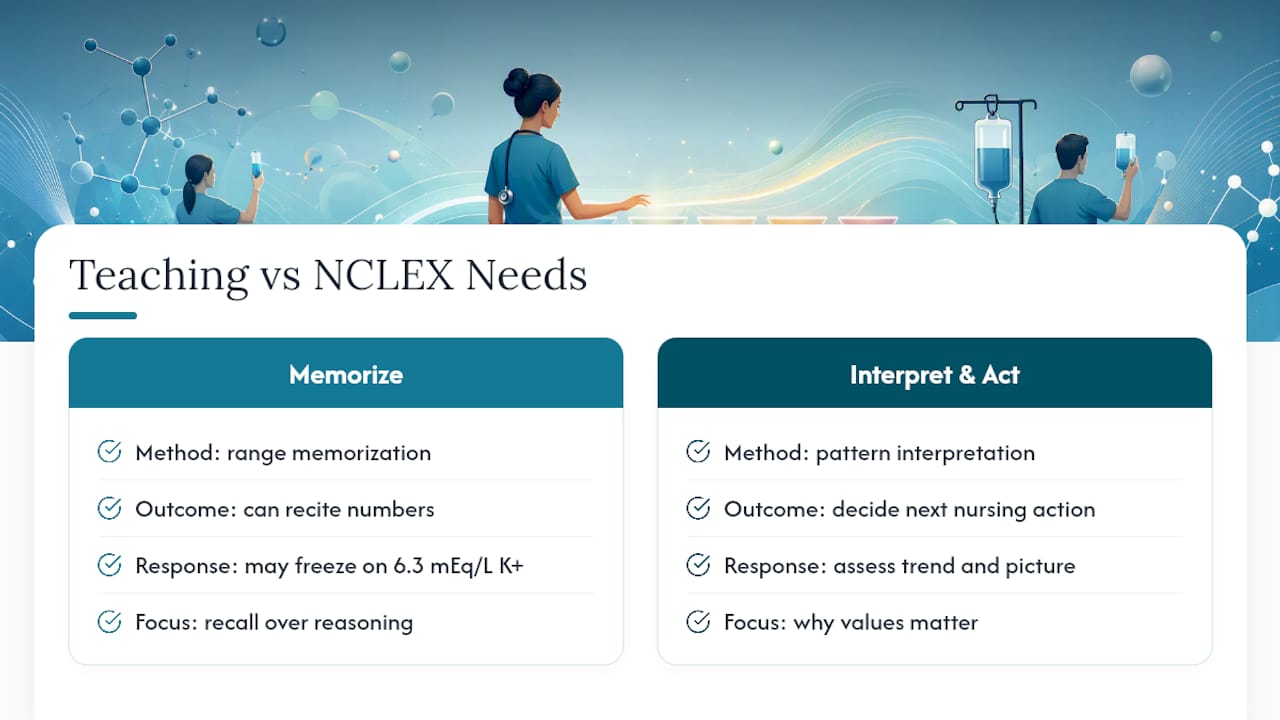
The conventional wisdom undersells interpretation and oversells recall. NCLEX has shifted hard toward next-generation case studies that reward exactly the kind of pattern thinking this guide leans on: is this abnormal value isolated or trending, does it match the clinical picture, and what's the actual nursing action. A student who understands why a BUN:creatinine ratio above 20:1 suggests dehydration rather than kidney damage will outperform one who only memorized the numbers, every time a case study throws a curveball.
If you're prioritizing study time, spend less of it drilling raw numbers and more of it drilling the "so what happens next" question for each abnormal value. The numbers are the easy part. Knowing what to do about them is the actual skill being tested.
— Autumn
Sources
- Normal Reference Ranges - Nursing Health Promotion - NCBI
- Laboratory reference ranges - Merck Manual (Professional)
- Reference ranges (ABIM)
- A1C test: information from CDC
- MedlinePlus — Laboratory tests (example page)