
Yes, you can retake the TEAS. ATI requires at least 14 days between TEAS at ATI appointments, but that is the floor, not the rule you should plan around. Most nursing programs layer their own requirements on top — longer waits, attempt caps, and specific rules about which score they actually use. Before you book another seat, here is what you need to confirm:
- ATI baseline: At least 14 days between TEAS at ATI attempts.
- Common school rule: Many programs require 30 days minimum and limit you to 2–3 attempts per cycle or calendar year.
- Immediate next step: Pull up your target program's admissions page and find their TEAS policy before you pay for another registration.
The rest of this guide walks through each layer so you know exactly what to ask and when to rebook.
Key Takeaways
The single most important rule in TEAS retake planning: confirm your target program's policy before you pay for another attempt, because school rules override ATI's baseline in every case.
| Point | Details |
|---|---|
| ATI baseline wait period | ATI requires at least 14 days between TEAS at ATI attempts; most schools require 30 days or more. |
| School attempt limits | Many programs cap attempts at 2 per application cycle or 3 per calendar year; confirm before booking. |
| Scoring model matters | Programs use highest score, most recent, highest average, or first attempt — know yours before retaking. |
| Score validity window | Validity ranges from 1–2 years depending on the program; scores must be valid at the application deadline. |
| Nursingschoolpro prep | Use the 48-hour free trial to identify weak sections and confirm readiness before paying for a retake. |
Table of Contents
- What is the official TEAS retake policy from ATI?
- How do nursing programs set their own retake rules?
- How do admissions offices handle multiple TEAS scores?
- What does a TEAS retake cost, and what is the refund policy?
- How long are TEAS scores valid?
- How do you confirm a specific program's retake rules?
- Should you retake now or study more first?
- An honest note on retesting strategy
- Focused TEAS practice before your next attempt
- Sources
What is the official TEAS retake policy from ATI?
ATI's scheduling rules apply specifically to TEAS at ATI sessions — the ones you book directly through ATI's platform. The 14-day minimum is the only universal wait period ATI publishes. ATI does not cap the total number of attempts for TEAS at ATI, which means the attempt limits you hear about almost always come from the school, not from ATI itself.
A few mechanics worth knowing before you schedule:
- Preliminary scores carry a watermark for several business days while ATI finalizes them. You cannot send an official transcript until that window closes.
- For TEAS at ATI, you control transcript delivery through your ATI account. For institution-administered exams, the transcript typically routes automatically to the testing school and cannot be redirected.
- Each attempt requires a fresh registration and payment through ATI's platform. There is no carry-over from a previous registration.
Pro Tip: Before you book a TEAS at ATI retake, write down your target school's wait-period requirement first. Then schedule your ATI appointment so the exam date clears that school's window, not just ATI's 14-day minimum. One calendar check now prevents a wasted registration fee later.
How do nursing programs set their own retake rules?
Schools are not bound by ATI's 14-day baseline when they administer the exam themselves or when they set admissions requirements. Most programs publish their own TEAS testing policy, and the variation is significant.
UCF's testing center, for example, allows three TEAS attempts per calendar year with a minimum 30-day wait between each attempt, and applicants pay a new registration fee every time. PHSC's testing center follows the same cadence: up to three attempts per year with a 30-day minimum between them. Arizona State University publishes its own TEAS requirements separately from ATI's baseline, reflecting the range of decisions programs make about accepted testing routes and attempt counts. CSU Channel Islands takes a stricter approach: if an applicant violates the program's stated testing policy, the school may accept only the first attempt on record rather than the most recent one.
Common institutional variations you will encounter:
- Longer wait periods: 30 days is the most common school-set minimum, double ATI's baseline.
- Attempt caps per cycle: Many programs allow 2 attempts per application cycle; others allow up to 3 per calendar year.
- Accepted testing routes: Some programs only accept scores from institution-administered sessions, not TEAS at ATI remote sessions.
- Mandatory transcript reporting: Several programs require you to upload every attempt, not just your best score.
- Policy-violation consequences: Violating a school's stated rules can result in application disqualification, not just a score penalty.
How do admissions offices handle multiple TEAS scores?
Which score a program uses matters as much as whether you can retake. The University of Arizona College of Nursing allows up to two attempts per application cycle and uses the highest average score across attempts — not the single highest result. That is a meaningful distinction. A strong second attempt paired with a weaker first attempt may not produce the outcome you expect if the program averages them.
The four scoring models programs commonly use, and what each means for your decision to retake:
Admissions offices at many programs request every TEAS transcript on file, which means a lower retake score is visible even if the program uses your highest result. Excessive retesting can also raise flags in competitive programs. Know the scoring model before you pay for another attempt.
What does a TEAS retake cost, and what is the refund policy?
Every retake is a new financial transaction. ATI's registration pages confirm that each attempt requires a separate registration and payment, and fees are generally non-refundable and non-transferable. Institution-administered exams follow the same principle, though the fee amount and any rescheduling exceptions vary by testing center.
Key financial and administrative points:
- Fee per attempt: Varies by testing route and institution; confirm the exact amount on the registration page you plan to use.
- Refunds: Rare. Most testing centers and ATI do not refund exam fees unless there is a documented emergency and the provider's policy explicitly allows it.
- Rescheduling: Some centers allow rescheduling within a window before the exam date; others treat a no-show as a used attempt with no refund.
- Preliminary score timing: Your official score is not available immediately. Wait for ATI to finalize the score before submitting a transcript to meet an admissions deadline.
Pro Tip: Screenshot the fee and refund policy on the exact registration page you use, not a general FAQ page. Policies can differ between ATI's platform and an institution's testing center, and you want documentation if a dispute arises.
How long are TEAS scores valid?
Score validity is school-specific. The University of Arizona sets a one-year validity window for its nursing program and requires scores to be valid at the application deadline, not just at the time of testing. Other programs accept scores up to two years from the exam date. ATI commonly references a two-year window as a general guideline, but individual programs set their own acceptance periods and those rules govern.
Always confirm the program's required score age before you test. If your score expires mid-cycle, you may need to retake regardless of how well you originally performed.
How do you confirm a specific program's retake rules?
The only reliable source is the program itself. Here is a short checklist to get the official answer before you spend money on another registration:
- Check the program's admissions page for a TEAS or assessment policy section.
- Find the policy PDF if one is linked — many programs publish a detailed testing policy document separate from the main admissions page.
- Email the admissions office with specific questions (see below). Do not rely on a general FAQ or a third-party summary.
- Record the reply. Save the email with the date and the name of the person who responded.
Sample questions to ask admissions:
- What is the minimum wait period between TEAS attempts for your program?
- How many attempts are allowed per application cycle and per calendar year?
- Which score does the program use: highest, most recent, highest average, or first qualifying?
- Do you accept TEAS at ATI (remote/online) scores, or only institution-administered scores?
- Are applicants required to submit transcripts for every attempt?
Pro Tip: Screenshot the program's TEAS policy page the day you read it, and save it with the date in the filename. Policy pages update without notice, and having a timestamped copy protects you if there is ever a discrepancy between what you read and what the school enforces.
Should you retake now or study more first?
Retaking immediately rarely produces a meaningfully different score without targeted preparation. A realistic decision framework:
- Retake now only if: The school permits it under its wait-period and attempt rules, your application deadline gives you enough time, and you have identified specific weak sections you can address before the exam date.
- Delay and study if: You are not sure which sections cost you the most points, you have not reviewed the content since your last attempt, or you are close to the program's attempt limit and cannot afford a lower score.
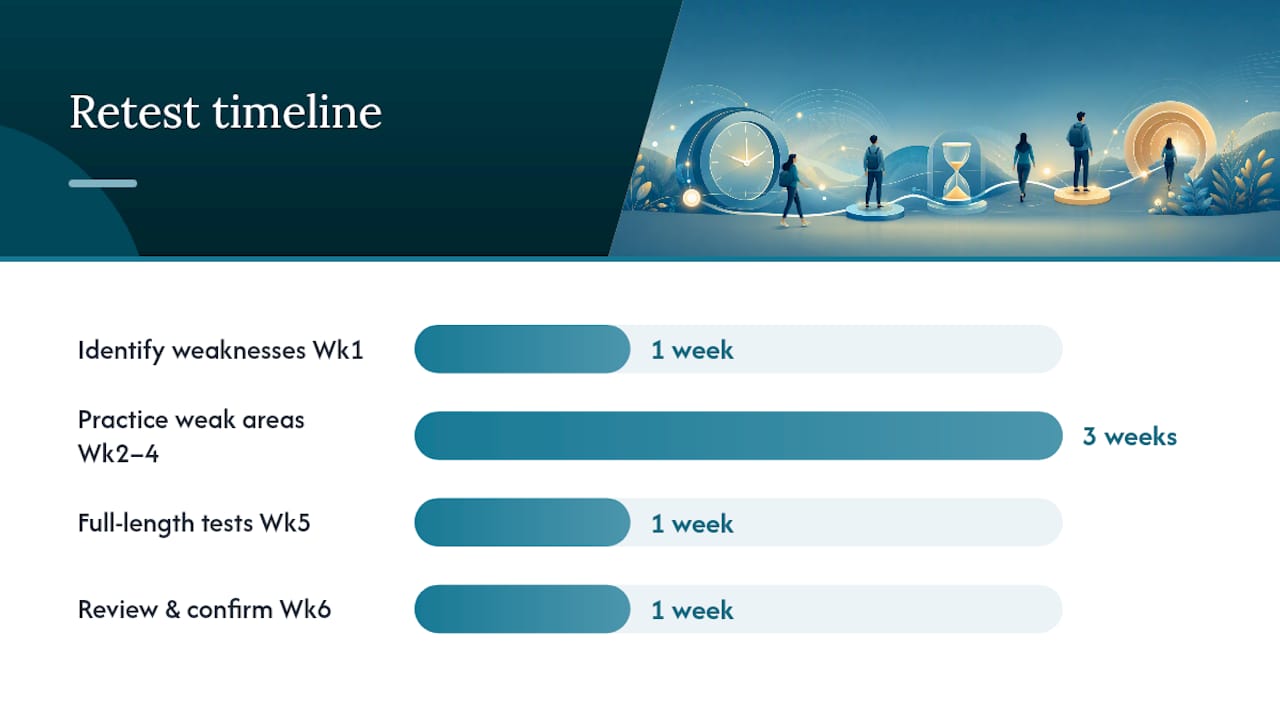
A practical 4–6 week retest timeline:
- Week 1: Pull your score report and identify the two or three content areas with the lowest sub-scores.
- Weeks 2–4: Focus practice on those weak areas. Use timed section drills, not just passive review.
- Week 5: Take at least two full-length timed practice tests under realistic conditions.
- Week 6: Review missed concepts from the practice tests, then confirm your readiness before booking.
Nursingschoolpro's study center offers section-specific TEAS practice with instant rationales, so you can see not just which questions you missed but why — which is the data you need to decide whether you are ready to rebook.
An honest note on retesting strategy
The TEAS retake policy conversation tends to focus on wait periods and attempt counts, but the more consequential question is whether a retake will actually change your application outcome. Confirm the school's scoring model first. If the program averages all attempts, a modest score improvement may not move the needle. If it uses the highest score, a well-prepared retake is worth the investment. The policy details are the starting point, not the whole picture.
Focused TEAS practice before your next attempt
Retaking the TEAS without closing the gaps that cost you points the first time is an expensive way to get the same result. Nursingschoolpro gives you section-by-section TEAS practice with instant rationales, real-time analytics that surface your weakest areas, and an evidence-based curriculum aligned with national nursing standards.
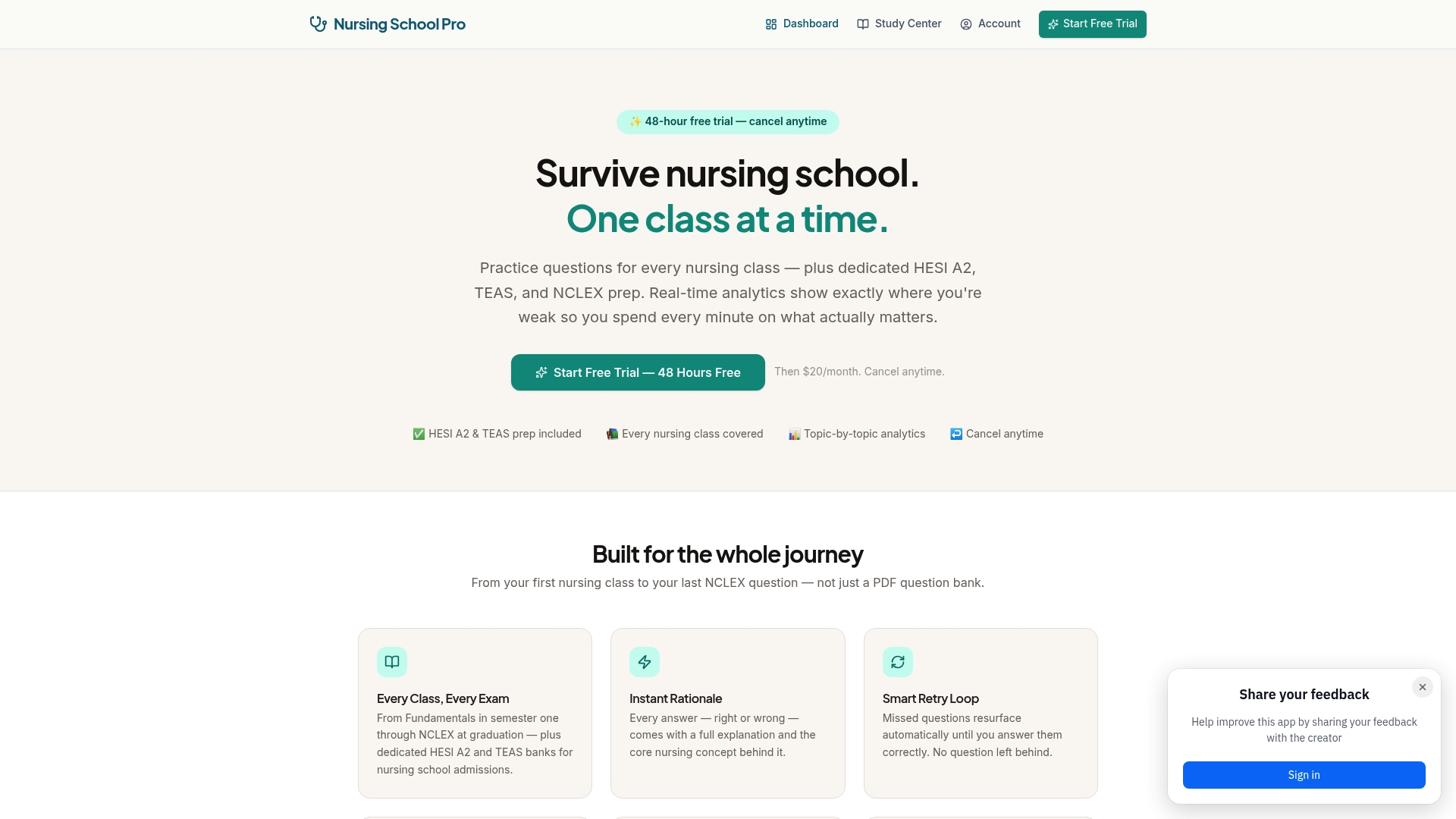
For $20 a month, you get access to the full TEAS study center — or start with a 48-hour free trial to see whether the practice data confirms you are ready to rebook. Check the pricing page for current trial details. Nursingschoolpro is a prep resource; all retake scheduling rules come from ATI or your admitting program.
Sources
Use these links as a starting point. Your target school may use different wording, different attempt limits, or different deadlines than the examples below.
- TEAS (In-Person) – Test of Essential Academic Skills • University Testing Center • UCF
- ATI TEAS Exam | University of Arizona College of Nursing
- Retake Policy - PHSC Testing