
The 2026 NCLEX-RN and NCLEX-PN test plans take effect April 1, 2026, and remain active through March 31, 2029. The practical result: modest wording refinements, continued weight on clinical judgment and NGN-style items, and zero changes to delivery format. No at-home testing, no new exam length, no overhaul of your curriculum.
Do this now:
- Download the 2026 NCLEX-RN Test Plan and the Candidate Bulletin.
- Adjust your study emphasis toward clinical judgment reasoning, not raw content recall.
- Forward both PDFs to your faculty or program director before the spring semester planning cycle.
Key Takeaways
The 2026 NCLEX update reinforces clinical judgment and clarifies activity statements without changing exam format, timing, or delivery method.
| Point | Details |
|---|---|
| Effective dates | RN and PN test plans run April 1, 2026 through March 31, 2029. |
| Format unchanged | CAT delivery, NGN item types, and item-count limits stay exactly the same. |
| Key content shift | Internal device monitoring moved to Physiological Adaptation; health equity woven into existing categories. |
| Study strategy | Keep broad content coverage since distribution percentages didn't change. |
| Aligned practice | Nursing School Pro maps questions to activity statements with instant rationales and analytics. |
Table of Contents
- What Changed in the 2026 NCLEX Test Plan
- What Is Not Changing in 2026
- NCLEX-RN Test Plan Details for 2026
- NCLEX-PN Test Plan Highlights for 2026
- Exam Administration and Scoring Facts to Memorize
- How Students Should Prep for the 2026 NCLEX
- How Faculty Should Align Curriculum for 2026
- Where to Find Official NCSBN 2026 Documents
- Why an Aligned Question Bank Matters for the 2026 Test Plan
- Why the Small Wording Changes Actually Matter
- Get Ready for the 2026 NCLEX With Aligned Practice Questions
- Frequently Asked Questions
- Sources
What Changed in the 2026 NCLEX Test Plan
The 2026 NCLEX blueprint update is a refinement, not a redesign. NCSBN reworded activity statements for clarity, folded health equity language into existing categories, and reassigned a handful of topics to different subcategories.
The most notable shift: internal device monitoring language now sits under Physiological Adaptation instead of a more general safety category, reflecting how often nurses now manage implanted and wearable monitoring technology at the bedside.
What actually moved in the 2026 NCLEX content outline:
- Modernized, clearer wording across several activity statements.
- Health equity concepts woven into existing Client Needs categories rather than added as a standalone category.
- Internal device monitoring reassigned to Physiological Adaptation.
- Clinical judgment reasoning steps reinforced across all four Client Needs categories.
Statistic Callout: NCSBN reevaluates the NCLEX passing standard every three years using standard-setting panels, candidate-performance data, and surveys of educators and employers. The test plan itself follows a similarly deliberate revision cycle, which is why 2026's edits read as targeted rather than sweeping.
What Is Not Changing in 2026
Here's the reassurance most students actually need: the exam experience itself barely moves. Computerized adaptive testing (CAT) remains the delivery method, and Next Generation NCLEX (NGN) item types with partial-credit scoring continue exactly as they have since 2023.
Unchanged for both RN and PN candidates:
- CAT delivery and item-selection logic based on your running ability estimate.
- NGN case studies, extended multiple response, and other current item formats.
- Minimum and maximum item counts, the testing time window, and the number of scored case sets.
- Content-distribution percentages across Client Needs categories.
That last point matters most for planning. Because content-distribution percentages stayed the same, broad-based review still works. You do not need a new study map, just a sharper one.
NCLEX-RN Test Plan Details for 2026
The 2026 NCLEX-RN Test Plan runs April 1, 2026 through March 31, 2029 and organizes content into four Client Needs categories, several split into subcategories covering everything from Basic Care and Comfort to Pharmacological Therapies.
CAT adjusts item difficulty in real time based on how you're answering, tightening or loosening the next question's difficulty to pinpoint your true ability level. RN candidates answer a minimum of 85 items and a maximum of 150 within a five-hour testing window, exactly as before.
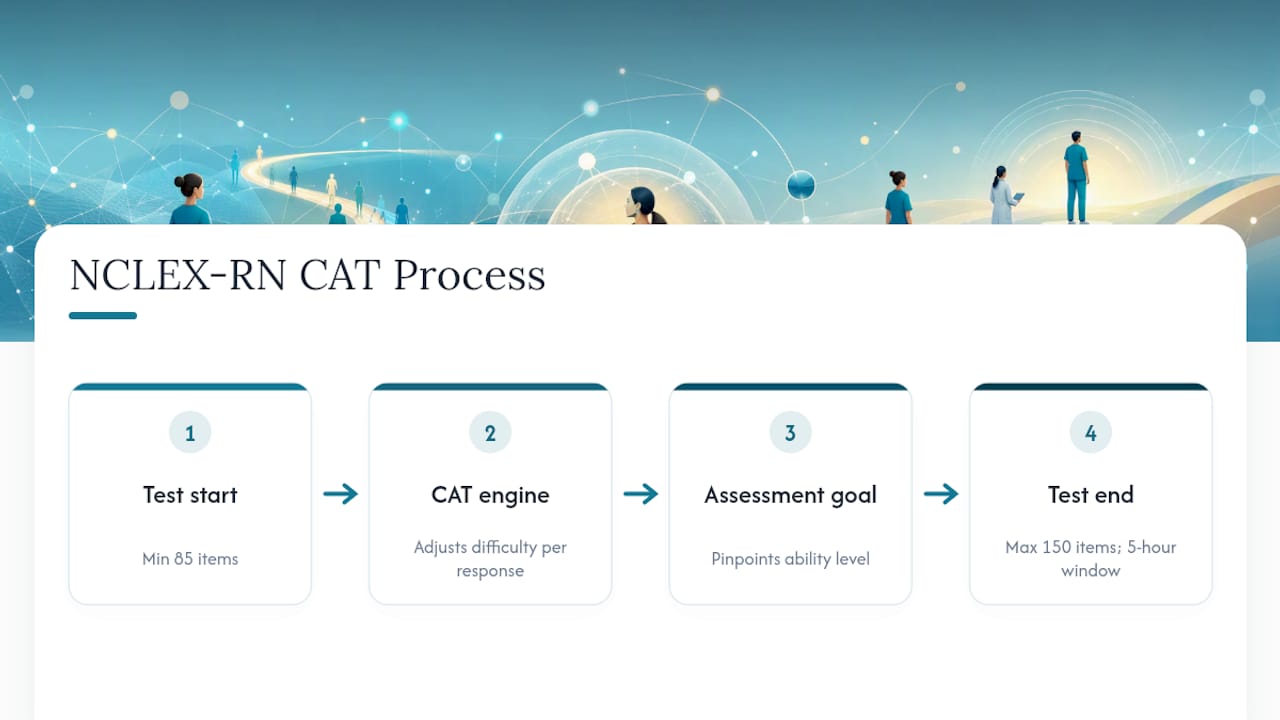
Clinical judgment processes stay woven through every category rather than isolated in one section. A handful of activity statements were reworded or reassigned. Internal device monitoring, as mentioned, now lives under Physiological Adaptation, reflecting nursing's growing role managing pacemakers, insulin pumps, and continuous glucose monitors.
The official test plan document includes sample case-set items and item-writing tips originally meant for item developers, but they're genuinely useful for candidates who want to see the exact reasoning structure examiners expect.
Pro Tip: Don't just answer practice case sets. Time yourself on a full six-item NGN case set exactly as it would appear on exam day. Most candidates lose points to pacing, not knowledge gaps.
Statistic Callout: RN candidates face a hard ceiling of 150 items in five hours, a rule the 2026 update leaves fully intact.
NCLEX-PN Test Plan Highlights for 2026
The 2026 NCLEX-PN Test Plan runs the same April 1, 2026 through March 31, 2029 window and mirrors the RN structure with four Client Needs categories, scaled to PN scope of practice.
PN-specific changes worth flagging:
- A small number of activity statements were added or reworded to match current PN scope-of-practice standards.
- One PN activity statement was removed, with its content folded into a related, retained statement rather than dropped entirely.
- Oxygen saturation monitoring language shifted toward general vital-signs assessment categories, aligning PN wording with how RN plans now frame similar monitoring tasks.
PN faculty should treat this the same way RN faculty do: a mapping exercise, not a rebuild.
Exam Administration and Scoring Facts to Memorize
Nothing here should surprise you if you've already tested under the current NGN format. NGN partial-credit scoring and the Judgment Measurement Model remain the scoring engine behind both exams, and the NCLEX passing standard gets reevaluated by the NCSBN Board of Directors every three years, not annually, so don't expect a moving target mid-year.
| Detail | RN Specification |
|---|---|
| Minimum items | 85 |
| Maximum items | 150 |
| Testing time | five-hour testing window |
| Delivery method | Computerized adaptive testing (CAT) |
| Scoring model | NGN partial-credit + Judgment Measurement Model |
Statistic Callout: The passing standard reset cycle runs on a fixed three-year rhythm, tied to the same review period as the test plan itself.
How Students Should Prep for the 2026 NCLEX
- Download the 2026 NCLEX-RN Test Plan or PN equivalent and read the activity statement list end to end.
- Cross-check your current practice question bank against the updated activity statements, especially internal device monitoring and health equity content.
- Prioritize NGN-style case sets over isolated multiple-choice drilling. The scoring model rewards multi-step reasoning.
- Keep your review broad. Content-distribution percentages didn't change, so skipping categories is still a losing strategy.
Weekly study plan template: three case-set practice sessions, two timed 75-question blocks mimicking exam pacing, and one review session focused solely on rationale reading, not just correct/incorrect tracking.
Pro Tip: When you miss an NGN case set item, don't just note the correct answer. Trace which clinical judgment step (recognize cues, analyze, prioritize, generate solutions) tripped you up. That's where partial-credit scoring actually lives.
How Faculty Should Align Curriculum for 2026
Most programs following the current NCLEX blueprint 2026 framework will not need a curriculum overhaul. Faculty guidance from testing organizations consistently frames this as a mapping exercise.
- Crosswalk your current course learning outcomes against the revised activity statements; start with one or two key assessments.
- Run an item-writing refresher for clinical faculty, using NCSBN's sample items as the model.
- Update rubrics tied to clinical judgment scoring rather than rewriting entire exam banks.
Where to Find Official NCSBN 2026 Documents
Bookmark the NCSBN publications page for the RN and PN test plans, the Candidate Bulletin, and information flyers. Each PDF lists effective dates, sample items, and item-writing tips. Faculty should archive copies and share direct links with course staff and clinical instructors.
Why an Aligned Question Bank Matters for the 2026 Test Plan
A practice platform worth using maps every question to a specific activity statement, includes NGN-style case sets with partial-credit scoring practice, and ties rationales directly to Client Needs categories. Faculty and students both need performance analytics broken down by activity statement and NGN scoring step, not just an overall percentage score. The Nursing School Pro study center builds its question mapping around exactly this structure.
Why the Small Wording Changes Actually Matter
Modest activity-statement clarifications sound minor until you consider what they protect: assessment fidelity between what nursing programs teach and what the exam actually measures at the bedside. Reassigning internal device monitoring to Physiological Adaptation isn't cosmetic. It reflects where that clinical reasoning genuinely belongs, and it's worth building your vital signs and assessment practice around that same logic now.
Get Ready for the 2026 NCLEX With Aligned Practice Questions
Cramming a generic question bank against a freshly revised test plan wastes study hours you don't have. Nursing School Pro maps its practice questions directly to current NCLEX activity statements, including the reassignments in the 2026 update, so your practice time targets what's actually being tested.
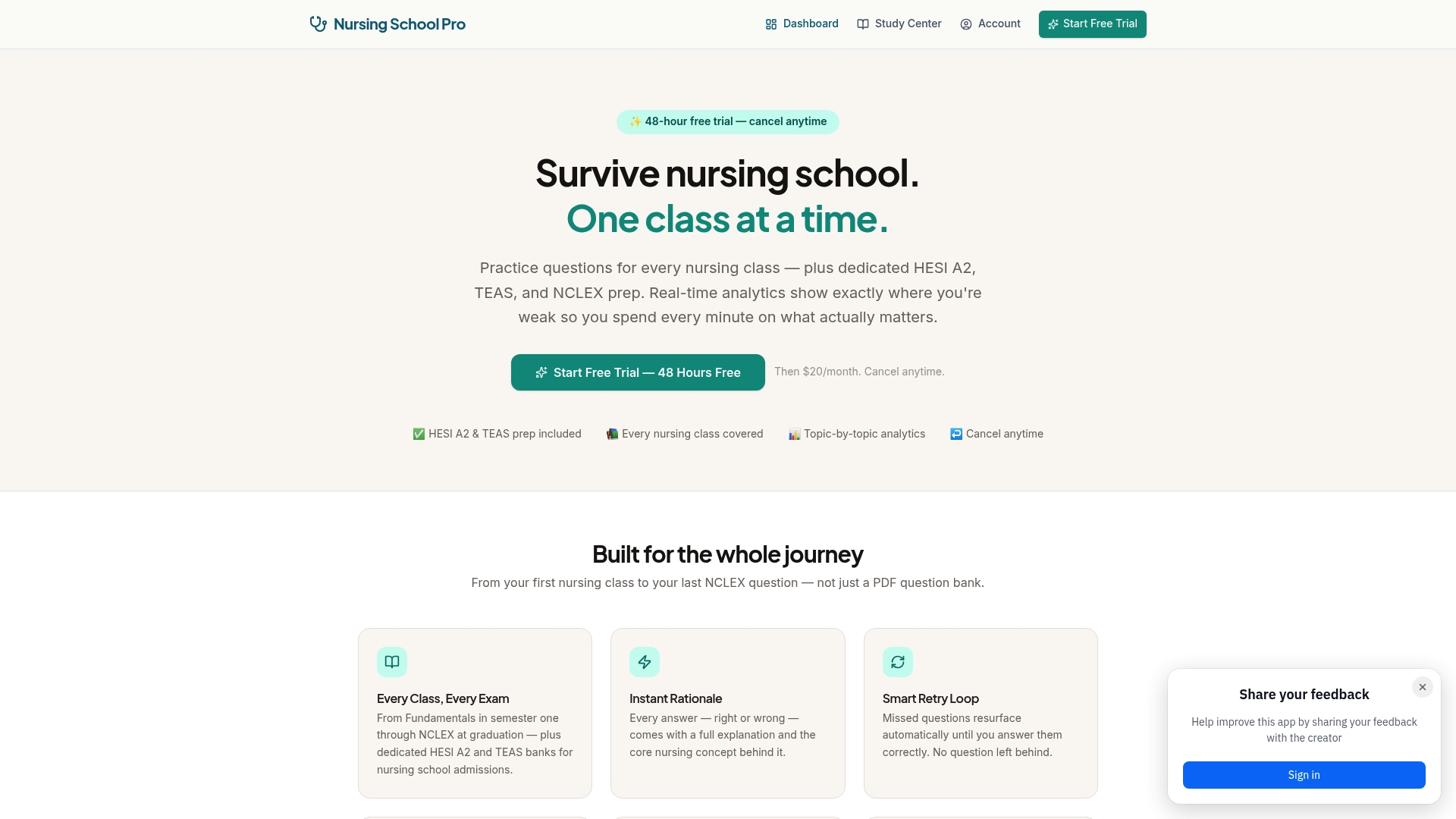
The platform includes NGN-style case sets with partial-credit scoring practice, instant rationales explaining the "why" behind every answer, and real-time analytics that flag weak activity-statement areas before they become test-day surprises. Faculty get the same mapping benefit for curriculum alignment work.
Start with the 48-hour free trial and explore the full study center to see how questions align to the 2026 blueprint before your next exam block.
Frequently Asked Questions
When do the 2026 NCLEX changes take effect? The 2026 NCLEX-RN and NCLEX-PN test plans take effect April 1, 2026, and remain in place through March 31, 2029.
Is the NCLEX moving to at-home testing in 2026? No. The 2026 NCLEX exam format stays in-person at Pearson VUE test centers. CAT delivery and current security protocols remain unchanged.
Did the number of exam questions change for 2026? No. RN candidates still answer a minimum of 85 and a maximum of 150 items within a five-hour window, per the official test plan.
Do nursing programs need to overhaul their curriculum for the 2026 test plan? Most programs don't. Educator guidance frames this as a mapping and clarification exercise, not a curriculum rebuild, since content-distribution percentages remained the same.
Where can I find the official 2026 NCLEX content outline? Download it directly from the NCSBN publications page, which hosts both the RN and PN test plans along with the Candidate Bulletin.